
Active Warrants in Hays County
Many offices can issue a warrant in Hays County. Justice of the Peace courts perform magistrate work and issue warrants for search and arrest, often in fine-only and failure-to-appear matters. The district and county courts issue bench warrants and capias orders in their own criminal and civil cases. The Sheriff's Office and city police then serve those warrants. Texas Code of Criminal Procedure Chapter 15 governs arrest warrants, and Chapter 17 governs bail and release conditions.
There is no single county website that lists every open warrant by name. Warrant information instead lives inside the case file and, once a person is booked, the jail record. That means a Hays County warrant search works best when you start from a case or a name and follow it to the issuing court. The Texas State Law Library guide explains how the state's courts are organized, which helps you find the right court fast.
Warrants do not all reach a public screen the moment a judge signs them. A search warrant may stay sealed during an active case. A new arrest warrant may not show online until the case is filed or the person is booked. Because of that lag, a name that returns nothing today is not proof that no warrant exists. The only sure check is a call to the issuing court or the Sheriff. Third-party warrant sites often copy old data and charge for it, so they should never be your source of truth.
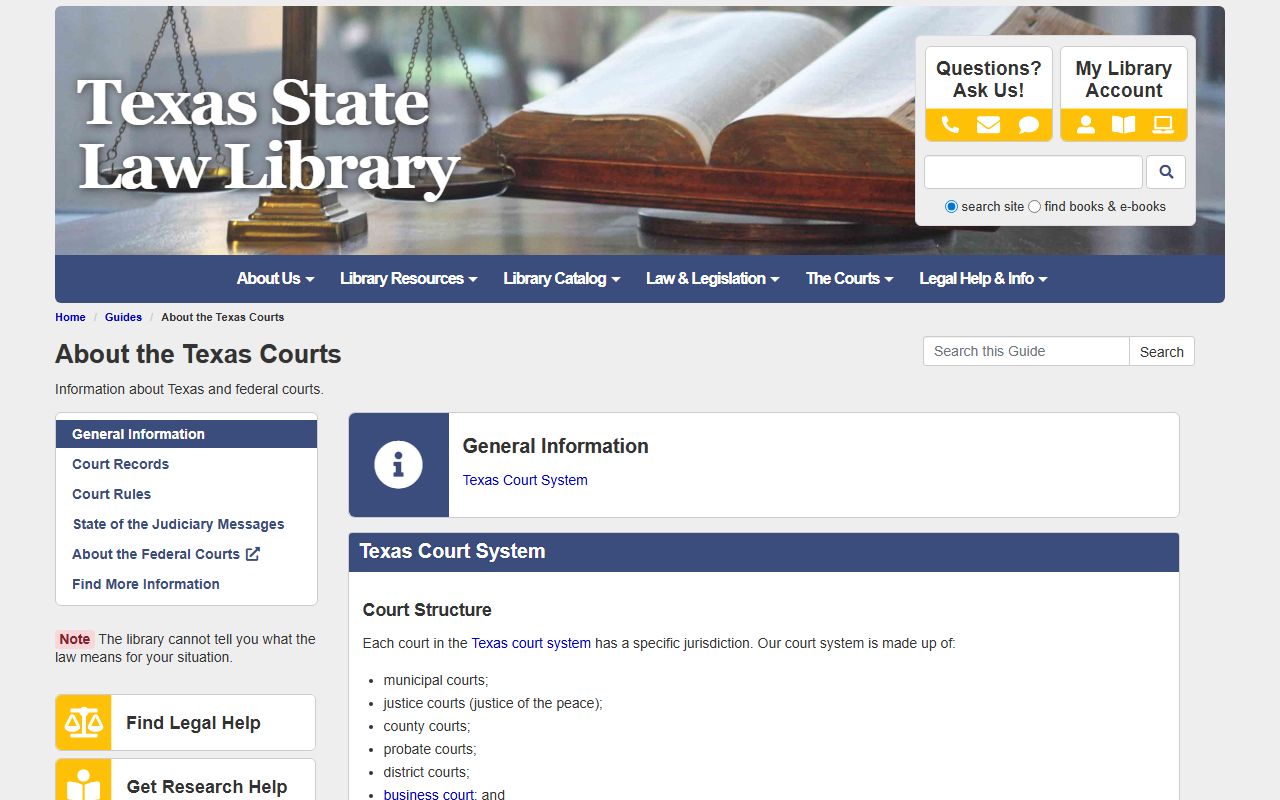
You can read that guide on the State Law Library site.
Types of Warrants in Hays County
Warrants are not all the same. The kind of warrant tells you which court issued it and how to clear it. Some come from a missed court date. Some come from a new charge. A few are signed before any arrest to allow a search.
- Arrest warrant - Authorizes police to arrest a named person for an alleged offense.
- Bench warrant - Issued by a judge, often after a person fails to appear or obey an order.
- Search warrant - Allows officers to search a place or item for evidence.
- Capias / capias pro fine - A writ for arrest tied to a case, often used when a fine goes unpaid.
JP and municipal warrants tend to involve fine-only matters and failure to appear. Felony warrants come from the district courts and call for more caution. A capias pro fine is its own category, used after a judgment when a fine and court costs go unpaid, and it is common in traffic and Class C cases.
How to Search Hays County Warrants
Because there is no standalone warrant list, use the official case and jail tools. The Odyssey Public Access portal lets you search criminal and court records for pending cases and upcoming settings, which often reveal a warrant or a missed date. The Jail Records search shows whether a person has already been booked. Justice court pages, like JP 5 in Buda, are the right contact for a fine-only or failure-to-appear warrant.
- Search Odyssey Public Access for the person's pending criminal or court cases.
- Check the Jail Records search to see if the person is already in custody.
- Call the issuing court or the Sheriff's Office to confirm a warrant and ask how to resolve it.
The JP 5 court page in Buda is one example of a precinct court that handles warrants and fine-only cases.
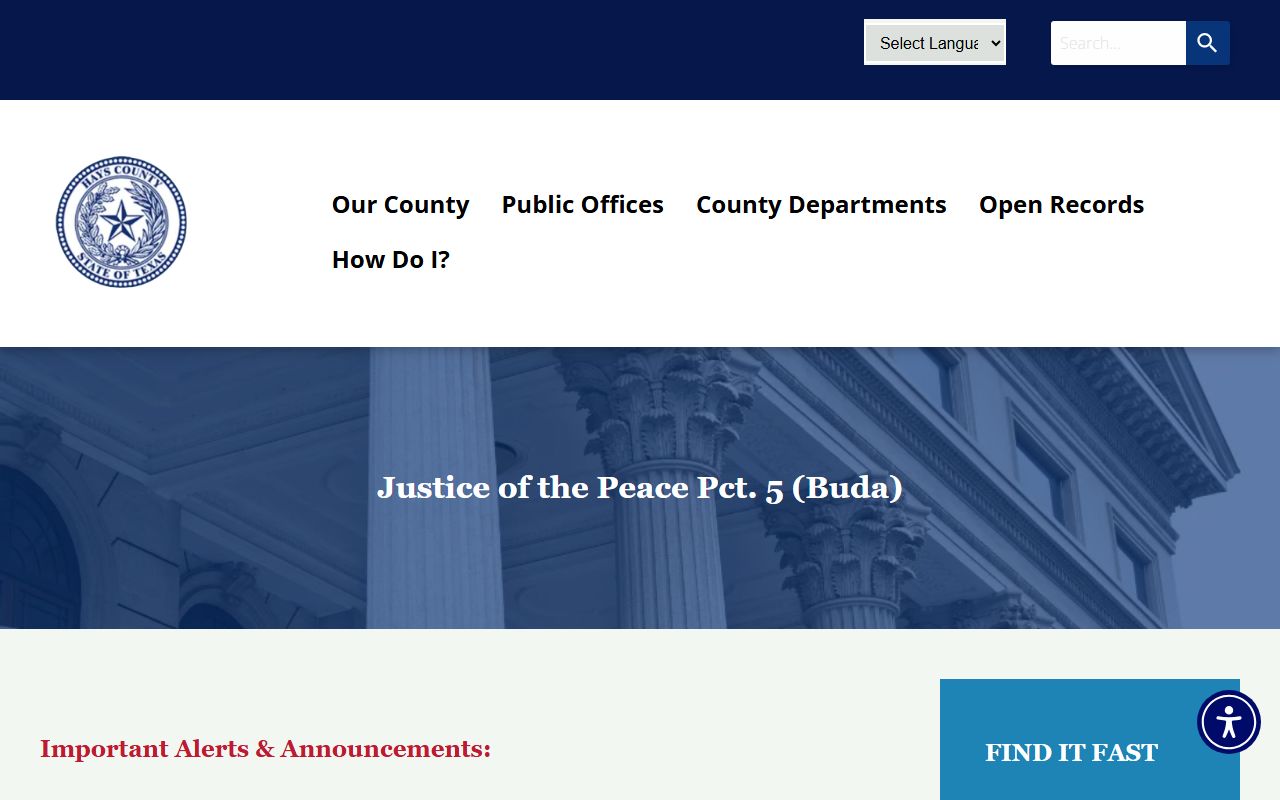
You can reach it from the Justice of the Peace Precinct 5 page. The county runs seven JP courts, so confirm which one holds the case.
Hays County Warrant Search Fields
Since warrant data sits inside the case and jail systems, the search fields are the Odyssey criminal and jail fields. They let you find the case or booking that a warrant attaches to. The main fields are below.
| Field Label | Type | Required | Notes |
|---|---|---|---|
| Last Name | Text | Yes | Required for a defendant search |
| First Name | Text | Yes | Required for a defendant search |
| Date of Birth | Text | No | Narrows a common name |
| Booking Number | Text | No | Used in the jail search if known |
| Case Number | Text | No | Jumps to a known case file |
| Case Status | Radio | No | All, Open, Closed |
What a Hays County Warrant Record Shows
When a warrant appears in an official system, it usually carries a set of fields tied to the case. The exact fields depend on the court and whether the person has been booked. The table lists the fields a warrant record commonly shows.
| Field | What It Shows |
|---|---|
| Person Name | The named subject of the warrant. |
| Cause / Case Number | The case the warrant is tied to. |
| Warrant Type | Arrest, bench, capias, capias pro fine, or search. |
| Issuing Court | The JP, county, or district court that signed it. |
| Bond Amount | The bond set, or a no-bond status. |
| Status | Open, served, recalled, or closed. |
Note: A warrant record is public case information, not legal advice, so confirm any warrant with the issuing court before you act on it.
Warrants and the Bond Process in Hays County
Most arrest warrants set a bond, and clearing the warrant often means posting that bond. Texas Code of Criminal Procedure Chapter 17 controls bail. A bond can be a cash bond, a surety bond through a licensed bail bond company, or a personal bond based on a written promise and conditions. A judge or magistrate sets the amount and any conditions. When the case is fine-only, a capias pro fine may be cleared by paying the fine and costs, though that can count as a plea, so ask first.
The Hays County Jail runs dedicated phone lines for bond questions. Bond information is handled at 512-393-7807 and 512-393-7690. Jail Records is 512-393-7832. If a person has already been arrested on a warrant, those lines and the jail roster are the fastest way to confirm custody and bond status. Release can be delayed by holds, transport, paperwork, or a second warrant, so confirm before you travel to the jail.
For a closer look at the booking and jail process, see the Hays County inmate records page.
What to Do If You Have an Outstanding Warrant
Handle a warrant through the right court, and do not rely on outside sites to confirm it. The steps differ by warrant type, but the order below works for most people.
- Identify the issuing court from the citation, notice, or case number.
- Call the court clerk or the Sheriff using official phone numbers, not a third-party site.
- Ask whether the warrant can be cleared by payment, a new court setting, a bond, or an appearance.
- For a felony or district warrant, talk to an attorney before you surrender.
Important: Talk to a lawyer before turning yourself in on a felony or district court warrant, since the steps and bond terms can affect your case.
Reporting a Wanted Person
The Sheriff's Office offers tip tools for the public, including the Tip 411 service and crime report links on its site. For wanted and fugitive cases, the U.S. Marshals Service lists the Hays County Sheriff's Office and the San Marcos Police Department as members of the Lone Star Fugitive Task Force. That task force is not a public warrant database, so use it as background, not as a search tool. To report a wanted person, use the Sheriff's official tip channels rather than an unofficial site.
Federal court records, including some federal case dockets, can be searched through free legal-research tools. CourtListener, run by the nonprofit Free Law Project, indexes federal opinions and dockets, though it is not a warrant list.
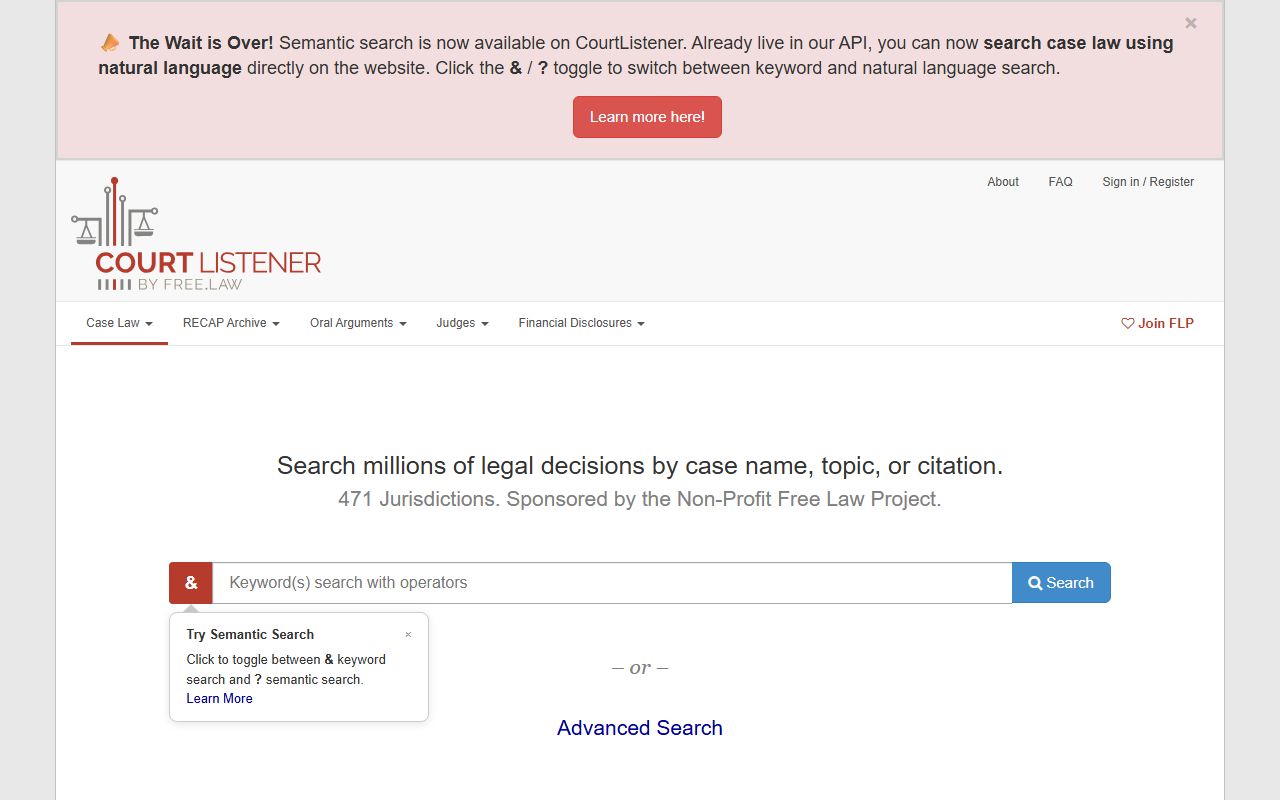
You can explore it at CourtListener; for federal cases tied to Hays County, see the district court page.
Restricted Hays County Warrant Records
Not every warrant is public. A sealed search warrant may be kept from view while an investigation is active, under the Public Information Act's law enforcement exception. Juvenile matters are restricted under Texas Family Code Chapter 58. Federal warrants are handled by federal agencies and the federal courts, not the county portal. So a clean county search does not prove there is no warrant at all, and confirmation should come from the issuing court or agency.
Knowing the issuing court also tells you how to resolve a warrant. A JP or municipal warrant for a fine-only case may be cleared at that court, sometimes with an online payment, though paying can count as a plea. A county court misdemeanor warrant runs through the County Clerk Courts Division and the assigned court. A felony warrant runs through the district courts and the District Clerk. Each court keeps its own records, so the citation, notice, or case number is the key that points you to the right office. When in doubt, the Sheriff's Office can tell you which agency holds the warrant.